|
Pat Brown wages war on the meat industry and much more! $$PLAIN_TEXT_PREVIEW$$
MY FAVOURITE THINGS
Hungry Like the Wolf
|
“Every four pounds (1.8 kilograms) of beef you eat contributes to as much global warming as flying from New York to London and the average American eats that much in a month.” — PAT BROWN
|
|
I love a good beef burger. There’s something indescribably exciting about enjoying a juicy one with a side of fries. After reading Tad Friend’s voluminous profile on the rise of environmentally-conscious alternatives to the meat industry however, I’m ready to do my small part for the greater good. As Pat Brown, the founder of Impossible Foods — a plant-based alternative to meat products, bluntly states; “The use of animals in food production is by far the most destructive technology on earth.” Friend deftly breaks down our current landscape, painting a picture that leaves little room for hope. If we stopped eating meat tomorrow, such a sacrifice would reduce greenhouse gas emissions by twenty percent. Instead we’re driving right into the eye of the storm, with surging demand for cheap meat driving the eradication of forested land as the global population steadily climbs towards eight billion. And while plant and cell-based meats make up only 0.1% of a $1.7 billion dollar global market, there are reasons to hold our heads high. As Tim Searchinger’s op-ed piece explains, Burger King is set to roll out Impossible’s plant-based range nationwide across the continental United States by year’s end. Requiring 87% less water and 96% less land than a meat burger (while emitting 89% less greenhouse gases) Impossible’s mission statement holds so much promise for the future. Now we just have to hope it tastes as good as the real deal.
|
|
My lady and I went to see Warner Bros. latest installment of their DC comics universe Saturday night and found ourselves getting lost in a brooding slow-burn drama about unmet dreams and unrequited love. Directed by Todd Phillips (Road Trip, The Hangover) the film closely resembles a genre of storytelling that went out of fashion with the Reagan eighties. Films like Midnight Cowboy, Scarecrow and Taxi Driver. Genre pictures that yearned to capture the limitations of man and the ramifications when we fall short of redemption. Joaquin Phoenix holds the center of this modern tragedy, filling every scene with an out-of-body performance that reminded me of Paul Thomas Anderson’s The Master. In the film’s opening frame, I quietly accepted that this film was going to divide people right down the line and push the comfort levels of a generation brought up on the high octane (and relatively benign) Marvel Cinematic Universe. While the jury is still out on its subliminal message, I’m excited that Gen Zers have the chance to enjoy a style of storytelling that inspired filmmakers like myself and have lost favour in our hyperkinetic times.
|
|
I tuned into the latest season of Elizabeth Day’s How To Fail while sweating out Friday night’s indulgences on the recliner bike. Featuring a conversation with Alain de Botton, the English philosopher, it dives into a fascinating examination of our inability to accept lives filled with consolation and compromise. As Botton tells it, our forebears were surprisingly humble creatures, graciously accepting that their lives were unremarkable in the grand scheme of things. They were made to understand that luck and fate played a large part in the outcome of their lives, prompting them to ask their favourite Gods for guidance, fortune or absolution. With the birth of the newly independent United States in the eighteenth century came a societal shift that promised its citizens a chance to taste heaven in this life. This core belief has since become second nature in our interconnected world and revolves around the pursuit of happiness. Never before have we had so much opportunity to ‘find ourselves’ and yet for all of these material pleasures, we’ve enslaved ourselves to the myth of Sisyphus. As Botton makes plain, people deem failure and success as equally deserved — “So much of what we define as a failure is an interpretation of facts.” — a reality that has made life so much harder to simply enjoy. When we have the courage to slow down and take stock of our lives we can finally accept that what we have is reason enough to be grateful.
|
|
I went to the pictures last night to see David Michôd’s latest venture. Released yesterday as part of a global Netflix release, the film is loosely based around William Shakespeare’s Henry V and centres around the rise of an unlikely boy king. Timothêe Chalamet shines in his portrayal of the wayward prince, a young man with great love and empathy in his soul. To witness his transformation into a ruthless and principled leader is something to behold. Written by Michôd and Joel Edgerton, a fellow Blue Tongue compatriot, the film spent over a decade in the development. Originally set up at Warner Bros, it was scheduled as Michôd’s follow up to his well-received debut Animal Kingdom in 2012. Instead the film found its way over to Netflix after Brad Pitt’s Plan B Entertainment joined the project (Michôd directed Pitt in the largely-panned War Machine back in 2017). For my money this is Michôd’s most accomplished film, delivering a story that channels the true nature of humanity. Delivering emotional turmoil and battle scenes that leave you squirming, this medieval coming of ager is sure to get the blood boiling. Do yourself a favour and leave your phone on the charger while you stream this one. You won’t regret it.
|
|
After renting Meet Joe Black, one of my favourite Hollywood melodramas, I found myself diving into the life of Sir Anthony Hopkins. I’m ashamed to admit that I knew little of the Welshman’s humble beginnings. Born in 1937, Hopkins devoted himself to the theatre, finding favour after being spotted by the one and only Laurence Olivier. Prior to his turn as Hannibal Lector in The Silence of the Lambs, Hopkins spent over two decades in front of the cameras. One of his major turns is the now-forgotten dramatic horror film Magic from the late nineteen-seventies. Directed by Richard Attenborough from a screenplay by William Goldman, Hopkins plays a lonely magician who develops a cult-like following after introducing a crass-talking ventriloquist dummy into his performance. When Hopkins finds himself falling to pieces on the cusp of stardom, he disappears into hiding back to his childhood town in the Catskills mountains. While the passage of time has not been kind to the film’s horror antics, the film does offer a fascinating portrayal of mental instability and the dangers of loneliness — mirroring many of the thematic elements in Joker. Hopkins is phenomenal here, giving voice to the pain and terror that runs within the duality of his persona — seeing him converse with his oversized dummy is exceptionally spine-tingling. You can find a 720p YouTube link to the film here.
|
|
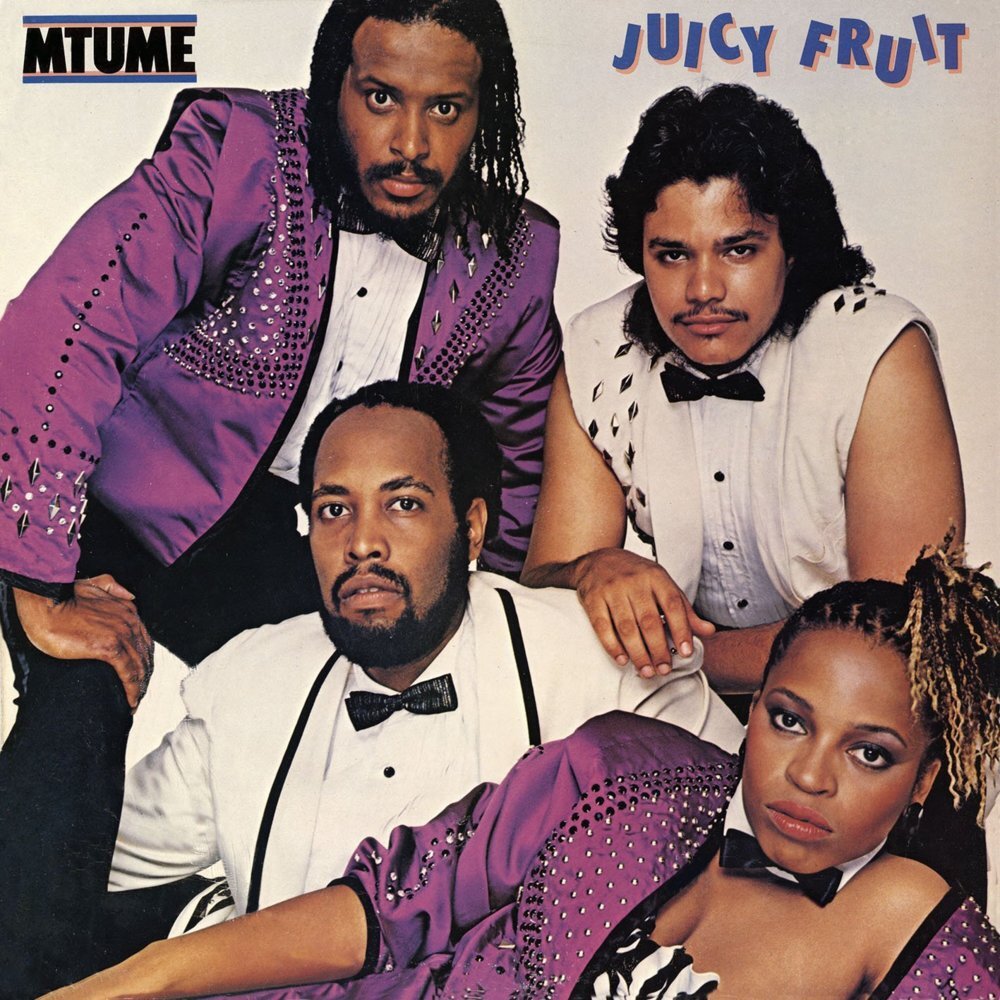
I was reunited with this bootylicious soundtrack from the early eighties after stumbling across White Boy Rick, the 2018 indie flick on Amazon Prime. Garnering rave reviews from the festival circuit, the Matthew McConaughey drama is set in nineteen-eighties Detroit and follows the true life story of Richard Wershe Jr., a fourteen year old kid who was coerced into dealing smack by the FBI before being sentenced to life in prison, where he served thirty years inside before being released in 2017 (update: he’s now back inside). Mtume (pronounced em-tum-ay) features on the killer soundtrack and left me curious to know more about their origins. Officially forming in the early nineteen-seventies, the New York group was founded by James Foreman (who went by the moniker James Mtume), recording three albums that failed to ignite. Signing with Epic Records in 1978, the group transitioned their sound eventually resulting in this 1983 hit. With their signature single immortalized by the late Notorious B.I.G. the album has an infectious pulse that just makes you want to dance the night away.
|
|
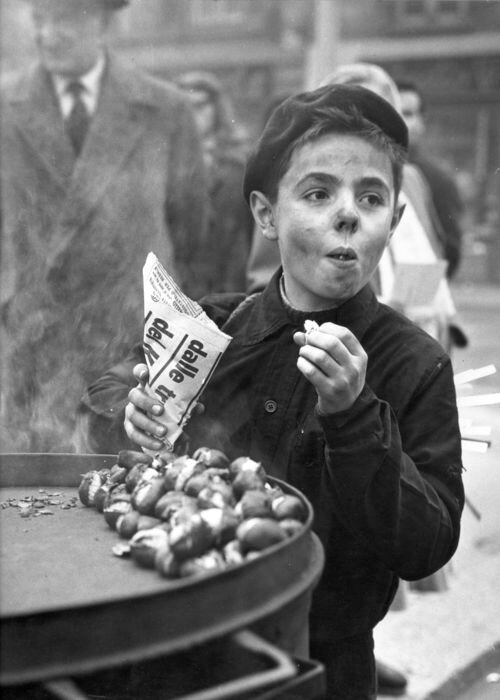
I came across a captivating photo of Salvador Dali in a Roman bookstore while travelling over the summer and decided to purchase a print as an early birthday present to myself. Upon arriving in the post I was delighted to discover it was accompanied by a certificate of authentication, acknowledging the photographer and context of my purchased print. I’d never heard of Guarnerio and after typing his name into google I became ever more enamored with the Italian photographer’s streetscapes and eye for capturing the mood and atmosphere of a time and place. Guarnerio was a member of the Farabola agency, a photo-journalism agency that represented some of the best Italian photographers of the twentieth century. While I was unsuccessful in turning up a Wikipedia page or any prominent articles in English on his life, this Facebook video confirms that the eighty-two year old paparazzo is still alive and well.
|
|
Thanks for tuning in. If you like this newsletter and want to support it, forward it to someone who’d like it. Until next time. Xo
|
|
|
|
|