|
Justin Vernon takes things back to basics and much more! $$PLAIN_TEXT_PREVIEW$$
MY FAVOURITE THINGS | Hey, Ma
|
“Over a three-month period I was there, letting myself get bored, allowing myself to do nothing for the first time in my life and not have any guilt about it. It was the first time I was really and truly on my own.” — JUSTIN VERNON
|
|
I’ve been having a little pity party this week, my head buried in a pile of academic journals and dissertations, all in preparation for my confirmation next year. While I’m only just beginning to comprehend the enormity of this PhD, I’ve been reminding myself that it’s no small feat to be tapped for a government scholarship. Taking the time to rekindle feelings of gratitude in the most arcane places is the reason I lust for life more than ever. P.S. I’m taking a week off for the Holidays but will be back to ring out the New Year!! Xo
|
|
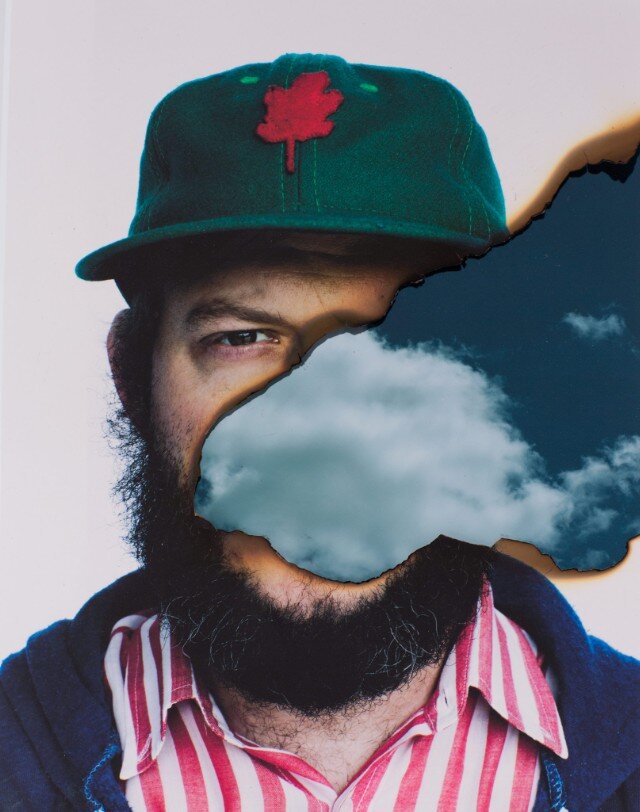
There was something strangely compelling listening to Justin Vernon deep dive into his musical process for his beloved moniker Bon Iver. Ever since his solo debut For Emma, Forever Ago took the world by storm in 2007, he has consistently managed to defy the expectations of the industry at large. After listening to Vernon in conversation with Rick Rubin, the acclaimed American record producer, I came away with a whole new perspective on the power of boredom. As Vernon makes clear in the quote above, it was instrumental in the creation of his first LP. Broken Record was created by the acclaimed investigative writer and journalist Malcolm Gladwell (Outliers, David and Goliath) in collaboration with Rubin, a podcast that aims to publish the liner notes for the digital age. In listening to Vernon reflect on his musical output, one thing was abundantly clear. He doesn’t know where he’s going, nor does he know what lies at the end of the road. Instead, he embeds himself into the studio with trusted collaborators and waits for the muse to find him. Hearing the Wisconsin native open up about the making of his latest album “i,i” is a special treat. Just knowing that the message of its title seeks to bring us all together with open arms is reason enough to smile.
|
|
Noah Baumbach does something remarkable in the first few minutes of his new Netflix film. He offers us a sincerely intimate look into the private space of two people who know each other inside out. This New York Times interview with the Brooklyn native offers some illuminating insights, most notably his exhaustive research that went into the original screenplay for the film. I was surprised (and comforted) to learn that the fifty-year old director once went through an eight year hiatus from making features, a fact that brought him great anxiety in his thirties.The opening montage that plays out alongside the voice-over narration is something profound, a piece of visual storytelling that makes you want to laugh and cry in the same breath. With this simple but masterfully crafted opening, Baumbach had me hungry for answers and reminded me that such a setup is the golden rule for directors the world over. To bring the audience in and show them why they need to see this journey through to the closing credits. While the two and a half hour picture dives into some sincerely uncomfortable territory that made me question the whole construct of marriage, it left me smarting about the importance of building genuine foundations.
|
|
This Netflix podcast on the origins behind Martin Scorsese’s latest historical epic is littered with a bucketload of curious insights. And while I’ve previously written about the film in this newsletter, this podcast has been plugging so many holes in my little monkey brain. Hosted by Sebastian Maniscalco, an actor and stand up comedian who plays “Crazy Joe” Gallo in the film, it is filled with the kind of trivia that makes me shake my head with admiration and wonder. I know from experience how harrowing an indie production schedule can be on a feature film. It’s another thing to conceive of a 108-day studio-shoot featuring 295 locations and a script that spans FIVE decades. The fact that the seventy-seven year old New York filmmaker had to spin so many plates and still managed to churn all that footage into a three and a half hour masterpiece is something to be celebrated. The finished product is a feat of endurance in and of itself. Listening to Robert De Niro, Joe Pesci (WOOF!) and Al Pacino share their insights into the story helped me to appreciate just how much the finished product serves as the very definition of their life and memories. So say what you will about the film (or its exceptional length) but there is something potent in its portrait of a generation.
|
|
It’s been just over a decade since this film came into this world and just as long since I’d laid eyes on it. Not only does it hold up surprisingly well, the Seth Rogen-James Franco pic was so far ahead of its times. In the years since its release, both California and Canada have legalized marijuana, a fact that would make Rogen’s Dale Denton a very happy chappy. There is something special within the structure of this film, an indelible mark that defines the writing of Rogen and Evan Goldberg. The screenwriting duo, forever immortalized within their High School sex comedy Superbad as a young Jonah Hill and Michael Cera, have an intuitive understanding of what audiences want. The very fact that this stoner-flick managed to bring in the cash money four times over is testament alone. Featuring an all-star cast, an ensemble that comprises their comedy troupe — Danny McBride and Bill Hader are sensational — the story does a phenomenal job of keeping the story moving within a serious cloud of ganja smoke. The perfect holiday treat to enjoy with one and all.
|
|
A word of warning. Tunes 2011-2019, released earlier this month, is not intended listening for dinner parties. Instead, the enigmatic British producer asks you to slip on a pair of your favourite headphones and step into his new album alone. The two-and-a-half hour LP is littered with cosmic soundscapes that make the hair on your neck stand tall, reducing me to some elemental state (not altogether dissimilar to Keanu Reeves being born again within the womb of the machine in The Matrix). As with his previous releases, both of which debuted in the noughties, there is something profound within its underlying sound. It offers an acoustic safety blanket, allowing you to dive down rabbit holes of your own making in search of your wildest whims. Its trancelike rhythm is imbued with a nostalgic romanticism, a longing for human connection. Hua Hsu has delivered the goods with a stand-up review of Burial’s latest release in last week’s New Yorker. William Emmanuel Bevan is not someone who enjoys the limelight, a producer who rarely tours or gives interviews. All the same, he has inspired a loyal following, most notably with the acclaimed documentarian Adam Curtis, who samples many of his iconic tracks in his groundbreaking doc Hypernormalisation. Bevan has built his career around stripping things back to their roots, finding something special within the very soundscapes we take for granted.
|
|
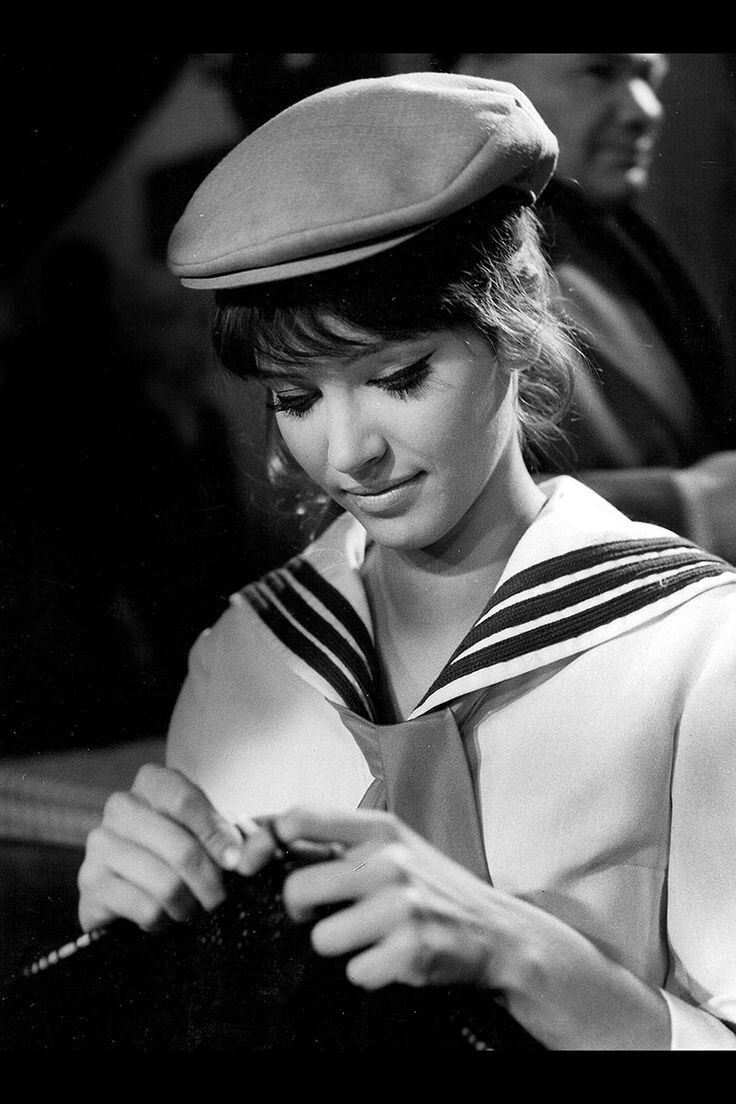
I was deeply saddened to learn of the Anna Karina’s passing last weekend at the age of seventy-nine. Karina was a powerhouse, a woman who came to represent the promise and irreverence of the Nouvelle Vague in the early nineteen-sixties. Born Hanne Karin Bayer in 1940’s Denmark, she moved to Paris as a teen, living on the streets before being spotted by a talent scout at Les Deux Magots in 1957. Within a matter of years, she had established herself as a successful model, being shot for the likes of Pierre Cardin and Coco Chanel (Karina later claimed Chanel provided the inspiration for her stage name). After turning down a bit part in Jean-Luc Godard’s debut Breathless (she refused to perform nude), she went on to collaborate with the French filmmaker on many of his most iconic pictures. Une femme est une Femme, The Little Soldier, Bande à part, Alphaville and Pierrot le Fou. I can’t tell you how besotted I was with the actress in my early twenties. She radiated a joie de vivre that knocked me out every single time. The iconic pair who would go on to wed in 1961 and would collaborate on seven film projects before annulling the marriage in 1965. The Danish-French actress would go on to set up her own production company in the 1970s, directing her own films and publishing four novels in the ensuing years.
|
|
Thanks for tuning in. If you like this newsletter and want to support it, forward it to someone who’d like it. Until next time. Xo
|
|
|
|
|