|
Brett Morgen’s Moonage Daydreams and much more!͏ ͏ ͏ ͏ ͏ ͏ ͏ ͏ ͏ ͏ ͏ ͏ ͏ ͏ ͏ ͏ ͏ ͏ ͏ ͏ ͏ ͏ ͏ ͏ ͏ ͏ ͏ ͏ ͏ ͏ ͏ ͏ ͏ ͏ ͏ ͏ ͏ ͏ ͏ ͏ ͏ ͏ ͏ ͏ ͏ ͏ ͏ ͏ ͏ ͏ ͏ ͏ ͏ ͏ ͏ ͏ ͏ ͏ ͏ ͏ ͏ ͏ ͏ ͏ ͏ ͏ ͏ ͏ ͏ ͏ ͏ ͏ ͏ ͏ ͏ ͏ ͏ ͏ ͏ ͏ ͏ ͏ ͏ ͏ ͏ ͏ ͏ ͏ ͏ ͏ ͏ ͏ ͏ ͏ ͏ ͏ ͏ ͏ ͏ ͏ ͏ ͏ ͏ ͏ ͏ ͏ ͏ ͏ ͏ ͏ ͏ ͏ ͏ ͏ ͏ ͏ ͏ ͏ ͏ ͏ ͏ ͏ ͏ ͏ ͏ ͏ ͏ ͏ ͏ ͏ ͏ ͏ ͏ ͏ ͏ ͏ ͏ ͏ ͏ ͏ ͏ ͏ ͏ ͏ ͏ ͏ ͏ ͏ ͏ ͏ ͏ ͏ ͏ ͏ ͏ ͏ ͏ ͏ ͏ ͏ ͏ ͏ ͏ ͏ ͏ ͏ ͏ ͏ ͏ ͏ ͏ ͏ ͏ ͏ ͏ ͏ ͏ ͏ ͏ ͏ ͏ ͏ ͏ ͏ ͏ ͏ ͏ ͏ ͏ ͏ ͏ ͏ ͏ ͏ ͏ ͏ ͏ ͏ ͏ ͏ ͏ ͏ ͏ ͏ ͏ ͏ ͏ ͏ ͏ ͏ ͏ ͏ ͏ ͏ ͏ ͏ ͏ ͏ ͏ ͏ ͏ ͏ ͏ ͏ ͏ ͏ ͏ ͏ ͏ ͏ ͏ ͏ ͏ ͏ ͏ ͏ ͏ ͏ ͏ ͏ ͏ ͏ ͏ ͏ ͏ ͏ ͏ ͏ ͏ ͏ ͏ ͏ ͏ ͏ ͏
MY FAVOURITE THINGS | Somebody Up There Likes Me
|
“All people, no matter who they are, all wish they’d appreciated life more. It’s what you do in life that’s important. Not how much time you have. Or what you wish you’d done.”— DAVID BOWIE
|
|
Benjamin Franklin’s 13 virtues caught my eye while scouring a recent reference PhD paper. With the benefits of meditation, and the mindfulness that it has wrought, I was surprised at how many of these principles I’d been implicitly channelling. Whether its leaning into the teachings of frugality and not wasting things (Virtue 5), keeping my excesses in check (Virtue 9) or making the most of the time that I have (Virtue 6). Such navel gazing led me to ponder a deeper notion. That when we find focus, losing ourselves within passioned pursuits, we’re able to shut out the noise. When this mindset becomes habit, it allows us to soften the side-effects of modern life with increasing consistency, and put our focus right where we want it.
|
|
Brett Morgen bottles the effervescent spirit of creative endeavour in his portrait of an artist in flux. His new doco, which I took myself to see one recent rainy afternoon, not only lived up to its teaser trailer, but inspired me to tune in and drop out that weekend. The cosmic trip led me to Cracked Actor, a 1974 BBC documentary that left my jaw on the floor and inspired Nic Roeg to cast the Brixton native in The Man Who Fell to Earth. That its director took a cue straight out of David Bowie’s playbook (and shape-shifting personas) in crafting a revelatory psychedelic romp rich in spectacle is reason enough to hunt down a showtime at your favourite cinema. I also loved Morgen’s spontaneous decision to cut up the red carpet at Cannes. “I don’t know which came first – puberty or Bowie. He came to me at that age. And like most people who come to Bowie at that age, he had a profound impact on the way I looked at myself and the way I looked at the world.” — Brett Morgen
|
|
A strange feeling swept over me as I lost myself within Andrew Dominik’s emotionally harrowing Venus fly-trap of a film. An ineffable sense that I was in truly capable hands. For all intents and purposes, this film, adapted from Joyce Carol Oates novel of the same name, works to set the record straight. To show the unvarnished life of Norma Jean Mortenson (Ana De Armas is inimitable as the starlet) and her love-hate relationship with her supernova alter-ego. What Dominik achieves in the process is a sublime examination on the pitfalls of propaganda and, to judge from the excoriating reviews, the lasting legacy of the marketing department. The Aussie filmmaker is that rare bird, one willing to tear down the glossy veneer of the dream factory to better show how Marilyn Monroe really got her start.
|
|
Nat Hentoff’s New Yorker piece on Bob Dylan sheds new light from the archives. What comes through this 1964 profile is the artist’s hunger for moral independence, a fresh start free from the shackles of organized power. It’s incredible to conceive how a young man from such humble circumstances was blessed with this inner compass. All the same I’ve found great comfort in Dylan’s mantra this year, wriggling free from the clutches of comfort in search of myself. It’s no wonder that his inspired rhetoric would mark him as a messiah to the protest generation. While I’m Not There, Todd Haynes’s pretentious tone poem, failed to hit the spot, I found great comfort in Dylan’s protest speech, read by Martin Scorsese from No Direction Home, at the Emergency Civil Liberties Committee in 1963. “That’s the cause of a lot of those chains I was talking about — people wanting to be accepted, people not wanting to be alone. But, after all, what is it to be alone? I’ve been alone sometimes in front of three thousand people.” — Bob Dylan
|
|
A retrospective screening of Sergio Leone’s The Good, The Bad and The Ugly set the record straight. Best remembered as a star vehicle for Clint Eastwood and his acclaimed Man with No Name persona, the film’s heart and soul rests squarely on the hunched shoulder’s of Eli Wallach’s Tuco, a lovable self-serving wretch. As I fell down a Wallach rabbit hole that evening, including this touching tribute from his Spaghetti Western co-star, I was left with a gnawing desire for more. Elia Kazan’s Baby Doll scratched that itch. The Brooklyn native is magnetic as a big-city carpetbagger whose thriving cotton gin is set fire to in a rural Mississippi county. There’s a reckoning power to this film, especially in the love triangle between Wallach, a teenage Carroll Baker and her cuckolded fiancé Karl Malden. It’s left me hungry to sit back down with The Misfits, an absolute cracker of a film.
|
|
I’ve been gunning to get my eyes on this show. Like any good drama, unresolved trauma lies at the heart of this gripping kitchen confidential. Its ability to capture the frenetic feeling of modern life reminding me of John Patton Ford’s newly-released Emily The Criminal (a must see). There’s something strangely cathartic in watching the show’s lead, played by Jeremy Allen White, struggling to stay afloat. While his constant setbacks are alluring cat-nip, I only wish he was a little less of a wet blanket. Christopher Storer, the show’s creator, excels at carving out a real slice of life. As this NY Times profile offers, Matty Matheson’s unique life experiences as a Toronto-based chef and restauranteur (he plays the show’s handyman), lends the story a genuine verité.
|
|
My little sister joined me for a Sunday night screening of Ridley Scott’s Alien at The Ritz. While I was surprised at the packed house, I was even more taken aback at the film’s deft balance between art and commerce. It’s been a long while since I sat down with a film that employs silence and negative space quite like this. The screening sent me down a rabbit hole as I gorged on The Beast Within: The Making of Alien, a three-hour doco on the making of this horror spectacle. Charles de Lauzirika unpacks the incredible layers of artistry and passion that underlie every layer of this film classic. That the audacity of passion won the day, and the box office, is a triumph always worth celebrating. It also inspired a Friday night in with Alien: Covenant, Scott’s cryptic bookend to the series.
|
|
There’s so many things I love about Michael Mann’s debut work of fiction. Firstly, the title, a so-called follow-up to a novel that never was (Heat was based on an original screenplay) coupled with the vicarious thrill of picturing Robert De Niro and Al Pacino in print. The whole thing has the energy of a tight script, moving in and out of scenes with hypnotic gusto and inspiring a frenetic rush of adrenaline in the process. Just like his films, the book immerses you in the belly of the beast, its cash heists and car chases leaping from the page. It also does justice to Val Kilmer’s character, the sole survivor of the 1995 heist thriller. Mann is a filmmaker’s filmmaker. A man whose attention to detail is uncompromising. I can’t wait for this sequel to get the green light.
|
|
While Rachel Syme’s article explained why I’ve never been able to get it up for Nora Ephron’s Hollywood oeuvre (When Harry Met Sally, Sleepless in Seattle), it did turn me onto this 1972 Esquire article. The heartfelt treatise had me in stitches at its candid portrait of adolescent anxiety. The gallows humour of a young girl trying, and failing, to compensate for her pre-adolescent body. Strange as it might seem, her confessional left me daydreaming on the exact moment I fell in love with breasts. It was a sparkling summer day on Barceloneta Beach back in 2008 when my Spanish girlfriend and her two friends nonchalantly decided to slip off their bikini tops to avoid a strap tan. And just like that, his impressionable young buck would never be the same again.
|
|
Richard Powers has enjoyed the kind of evolutionary journey that warrants its own Hollywood biopic. His transition from the human sciences to the humbling sciences leading to the gift that is The Overstory. Thanks to Powers, and the profound themes imparted in his 2019 Pulitzer Prize winning novel, I’ve undergone a radical shift in consciousness. His prose awakening me to the fact that our inability to view the natural world as an equal has effectively sown the seeds of our own destruction. And while it feels like art is losing its mojo in the age of anxiety, a re-listen of this conversation reminds that you need to change minds in order to change politics. Ahead of ordering his new book, Bewilderment, I hunted down a second-hand copy of The Echo Maker on the advice of Kim Stanley Robinson. “But conceptually we still have this demented idea that consciousness creates a sanctity and a separation that almost nullifies the continuous elements of evolution and biology that we’ve come to understand.” — Richard Powers
|
|
Truman Capote’s uncompromising look at Marlon Brando in his prime makes for vicarious reading. The Duke In His Domain not only spills some juicy tea, but pulls back the curtain on a man who was arguably as influential as Coca Cola when this piece went to print in 1957. While I didn’t have the heart to stream Sayonara, the treacly romantic drama that Brando was on location filming in Kyoto (too many shades of white saviour narrative for one sitting) it did inspire me to seek out 1953’s The Wild One and 1961’s One-Eyed Jacks. While I can’t recommend the former, the latter is a rarefied treat and marks Brando’s first and only time behind the camera. The goose hunt turned me onto Brando For Breakfast, a sordid exposé on the actor’s many contradictions, as seen through the eyes of his first wife Anna Kashfi.
|
|
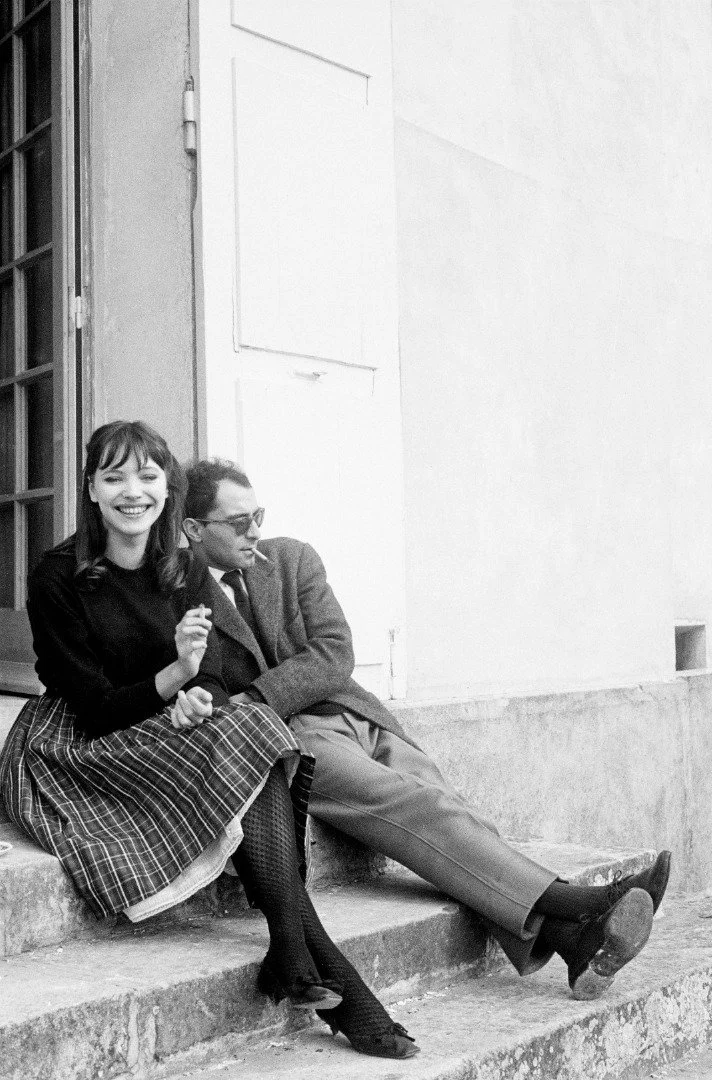
News of the passing of the iconic French filmmaker, one of the last holdouts from the French New Wave, was slow to take hold. It had been many years since I’d sat down with his work, films whose iconoclastic sequences linger to this day. After making time for An Exile In Paradise, Richard Brody’s considered profile on the reclusive visionary, I found myself seeking out some of my favourites, pictures like 1961’s Une Femme Est Une Femme, 1962’s Vivre Sa Vie and 1963’s Le Mépris (Anna Karina was my teenage crush). To my mind, Godard’s legacy just about sums up French culture. Sententious and contrarian yet possessed by a wisdom and unrelenting passion that enthralls and irritates in equal measure. “A story should have a beginning, a middle and an end, but not necessarily in that order.” — Jean-Luc Godard
|
|
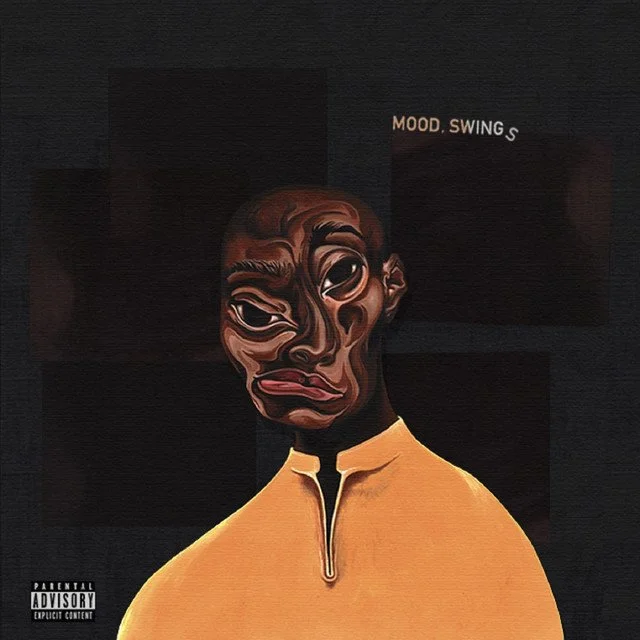
Since stumbling upon this 2019 release a few weeks back, I’ve been returning to Bruises, the album’s lead single, for acoustic nourishment. There’s a quiet confidence to this whole package, an underlying sound that harnesses the seductive grace of D’Angelo. This Q&A chat with Equate Magazine opens up some curious territory on the Dalston native. That we share a mutual love for Marvin Gaye, an artist whose contrarian stance on nature vs. nurture courses through my own creative outlook, only sweetens the deal. Playing this LP from cover to cover leaves one exhausted and glistening, reminiscent of the warm afterglow from a hot flow Yoga class.
|
|
Thanks for reading. To show your support, forward it to someone who’d like it or treat yourself to one of my books.
If you’re seeing this newsletter for the first time, you can read previous issues and subscribe here.
|
|
|
|