|
Why Seth Rogen is cooking with the good oil and much more! $$PLAIN_TEXT_PREVIEW$$
MY FAVOURITE THINGS | High By The Beach
|
“I really always worked hard, because I recognized from a pretty young age it was one of the only things I could control,” — SETH ROGEN
|
|
If you’re reading this newsletter then you’ve gone and made it into the new decade! It’s a special thing to be living in the twenties, a word that really rolls off the tongue and brings to mind exuberance and the lindy hop. While I was filled with great trepidation in the first few days (a direct result of too much of a good time on NYE) I’m feeling downright excited for the year to come. P.S. I’m sadly cutting back the newsletter to a fortnightly basis in order to put my PhD research front and center in advance of my confirmation later this year. Wish me luck! (I’m gonna need it)
|
|
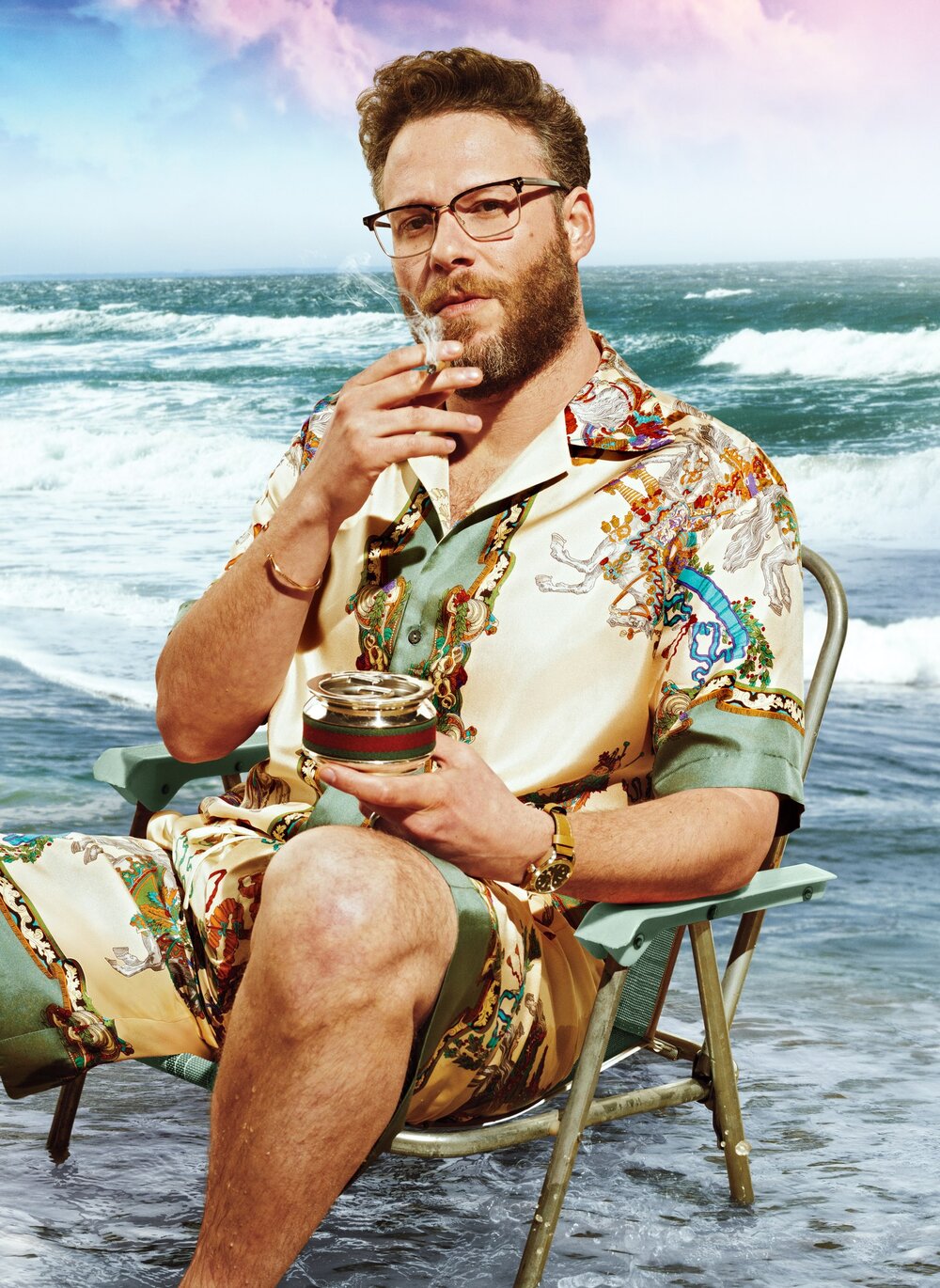
I can’t think of a better article to kick off the New Year and am only sorry that I snoozed right through Seth Rogen’s GQ cover article from May last year. There is something truly profound about the intensity with which the Canadian talent directs his energies into all the right places. He is a man possessed, quietly building his empire of laugh-out-loud comedies and dramedies for the big and little screen and shifting the culture right under our noses. I wrote about Rogen and his producing partner Evan Goldberg more than once last year and have found myself marveling at the fact that their symbiotic relationship (and prolific output) continues to bring home the organic bacon. As Caroline McCloskey wryly notes, Rogen’s evolution from his stoner-geek days of the noughties (Pineapple Express, Zack and Miri Make a Porno) into a self-aware man-child (Neighbors, The Night Before, Long Shot) has obscured our ability to put two and two together. Behind the camera meanwhile, Rogen has been stewarding some pretty incredible projects into the light of day. TV shows like Black Monday, Future Man, Preacher and The Boys have been slowly shifting the culture from the inside out, content that all have a self-referential fix. Not to mention Houseplant, Rogen’s very own marijuana strain that is making waves across Continental Canada in the wake of their legalization last year. The man is my spirit animal for the coming decade!
|
|
I’m ashamed to admit I was full of grave regret when the first line of subtitles filled the screen in the opening minutes of Céline Sciamma’s latest film — for some reason I had mistaken it for an English film — concerned that it’s underlying strength might be lost in sacrifice to French pomp and pretense. Instead, I found myself growing more and more emotional as I was swallowed whole by the illicit love affair that plays out between two women in late 18th Century Brittany. Sciamma, it’s writer and director, has constructed a masterful piece of visual storytelling, bringing a relationship to life that feels so honest and true. When a Parisian painter (Noémie Merlant) is invited to a remote estate to paint the portrait of a young noblewoman for her Italian husband-to-be (Adèle Haenel) a connection is struck that can’t be undone. While there is such a confessional sensibility to the drama that unfolds, I was nonetheless surprised to discover that Sciamma and Haenel had been romantically involved since 2014, amicably splitting months before production started. A “manifesto of the gaze”, it offers up such a bold examination of female repression, a truth that plays out in a heart wrenching abortion scene. Never have I ever witnessed something so tender and emotionally absorbing. One of the most powerful movies from last year by a country mile.
|
|
I finished Malcolm Gladwell’s latest publication Talking to Strangers last week (my first book of the new decade!) and while I was a little underwhelmed — I admittedly had unrealistically high expectations — it left me hungry to dive back into his back catalogue. Downloading his first published book from 2000 onto my Audible app, I found myself listening to it at every available juncture. Cooking dinner; working out; taking my little sister’s pooch for a walk. There is an infectious quality to the way Gladwell samples real life events in order to weave a larger talking point together. He breaks down the power of epidemics through a three-tiered system. The law of the few (agents of change), its underlying stickiness (ability to sink into the culture) and the power of context (right place, right time). A resonant example centers upon the rampant decline in crime and disorderly conduct in 1980s New York City. In the early 1980s, NYC was facing one of the worst crime and murder rates on record. Yet within a matter of years, the situation underwent a profound shift thanks to a small handful of individuals who were led by the blind belief in a new way of thinking. Imposing severe repercussions for a range of seemingly innocuous offenses, from fare-jumping to public urination, they re-educated the public as to the true meaning of decency. We only need to look at the New York of today (an overpriced Disneyland) to know that William Bratton’s dream has been fulfilled many times over. For those interested in tucking into his latest book have a listen to him in conversation with Elizabeth Day on her seminal podcast series How To Fail this week.
|
|
After finishing the first draft of a new screenplay this week, I’ve been slowly accepting what all writers intuitively know but don’t have the guts to say out loud. It stinks! In an attempt to pick up the pieces I decided to dive back into a classic from my childhood that offers incredible insight for the upcoming re-write. Boy does Alexander Payne’s second feature knock it out the park. Adapted from Tom Perrotta’s novel of the same name by Payne and Jim Taylor — Payne’s producing partner in Ad Hominem Productions — the 1999 dramedy immerses you into high-school life with such intricate detail. It brought back so many emotions from my teenage years, bittersweet memories of angst and youthful passion. A 23 year-old Reese Witherspoon exudes such strength in the lead, laying all her cards on the table like a true professional while Matthew Broderick is sensational as the earnest yet castrated English teacher. A big shoutout to Chris Klein, who shines bright as the egghead jock, bringing so much humanity to the role. If only Payne could infuse some of this magic into his upcoming projects.
|
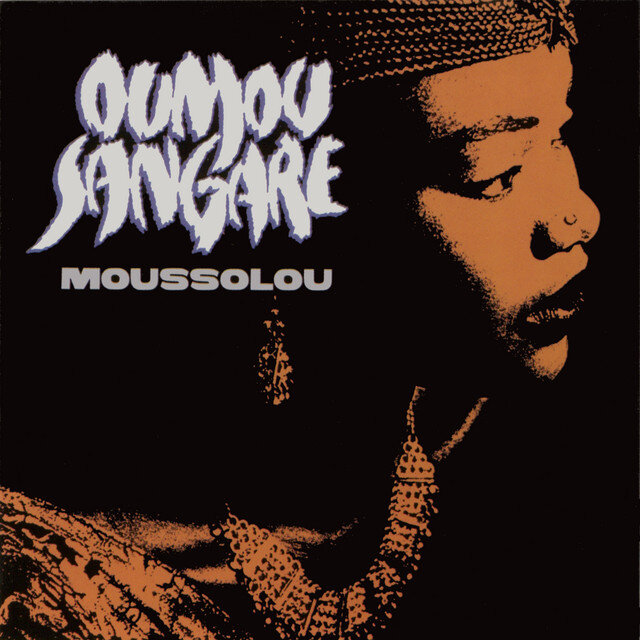
Oumou Sangaré - MoussolouIt’s rare for an artist to bring such an action-packed sound to their debut release. Oumou Sangaré does just that with Moussolou. Released in 1990, her six-track debut is something to behold, littered with music that makes the hips start swaying uncontrollably. Recorded with Bintou Sidibé, a Malian heavyweight from the nineteen-eighties, it made waves across Africa upon release and established the twenty-one year old as an overnight sensation. Sangaré’s vocals, recorded over traditional rhythmic percussion, are so honest and affirming that they make you stop and listen. I was blown away to discover that Sangaré is a flourishing entrepreneur with interests in hotels, agriculture and her own car company! After being approached by a Chinese firm, she decided to spearhead the creation of her own car — the ‘Oum Sang’. It’s so special to come across an artist who is using her celebrity to show people a way forward, empowering them to cultivate a model of self-sufficiency. "I helped build the hotel myself. I did it to show women that you can make your life better by working. And many more are working these days, forming co-operatives to make soap or clothes."
|
|
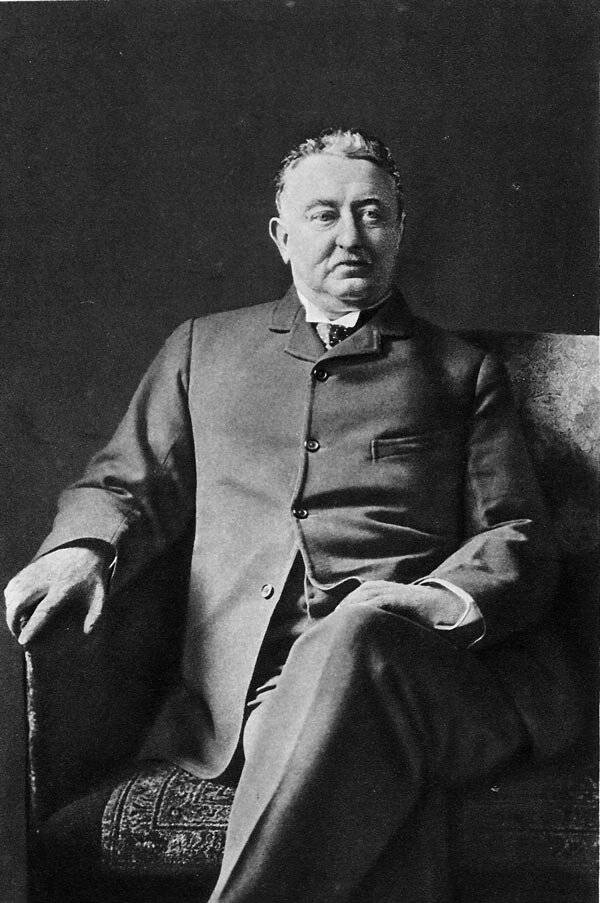
I’m still feasting on Niall Ferguson’s Empire, an illuminating look at the rise and fall of the British Empire and its far reaching impact on the world we know today. As Ferguson dove into the Empire’s exploration of Southern Africa in the late nineteenth century, I came across the curious case of Cecil Rhodes. The founder of De Beers, a diamond company whose relevance in our materialist culture is undisputed, Rhodes was celebrated as one of the most powerful men in the world. His sphere of influence would allow him to found the territory of Rhodesia (now Zimbabwe) in 1891, named in his honour. The son of a vicar, Rhodes was a sickly child whose ill health prompted his family to relocate to South Africa at the age of seventeen. He would enter the diamond trade the following year in 1871 and within two decades would consolidate an immense amount of power and wealth. I was fascinated to learn about the history of diamonds, how these precious gems were once as cheap as chips, a byproduct of the hundreds of companies trading on the market. This reality would prove unacceptable to the Rothschild banking corporation who was instrumental in instigating the merging of these fledgling companies into a select few. As capitalism has proven time and again, history’s winners are rarely ever the best or most competitive but instead the ones with the biggest cojones (and the best connections). In Rhodes’ case, his close relationship with Nathan Mayer Rothschild, the owner of the largest financial institution in the world, would prove sincerely beneficial in helping him rise to the top. Plagued by severe heart conditions through his adult life, the diamond magnate would succumb to heart failure in 1902 at the tender age of forty-eight.
|
|
Thanks for tuning in. If you like this newsletter and want to support it, forward it to someone who’d like it. Until next time. Xo
|
|
|
|
|