|
Why we must heed David Attenborough now and much more! $$PLAIN_TEXT_PREVIEW$$
MY FAVOURITE THINGS | (For God’s Sake) Give More Power To The People
|
“The natural world is the greatest source of excitement. The greatest source of visual beauty. It is the greatest source of so much in life that makes life worth living.” — DAVID ATTENBOROUGH
|
|
I’m not gonna lie. The recent US elections, which succeeded in dragging on for longer than anyone cares to remember, left me climbing the walls. More than the disquieting rhetoric surrounding the whole process, it was the fact that its outcome may very well dictate the future we live in. I’ve always equated the US with the Roman empire, a country whose power and influence has effectively reshaped the world we live in. Much like that former Empire, it is a land of contradictions whose founding principles once inspired a sense of possibility. And while it took four days to put an end to four (long) years of tyranny I can only hope that the President-Elect can (finally) return to the Paris climate accords and nudge Australia and its ilk towards comprehensive legislation. In the meantime all my fellow Antipodeans can join me in signing this Climate Act Now e-petition here.
|
|
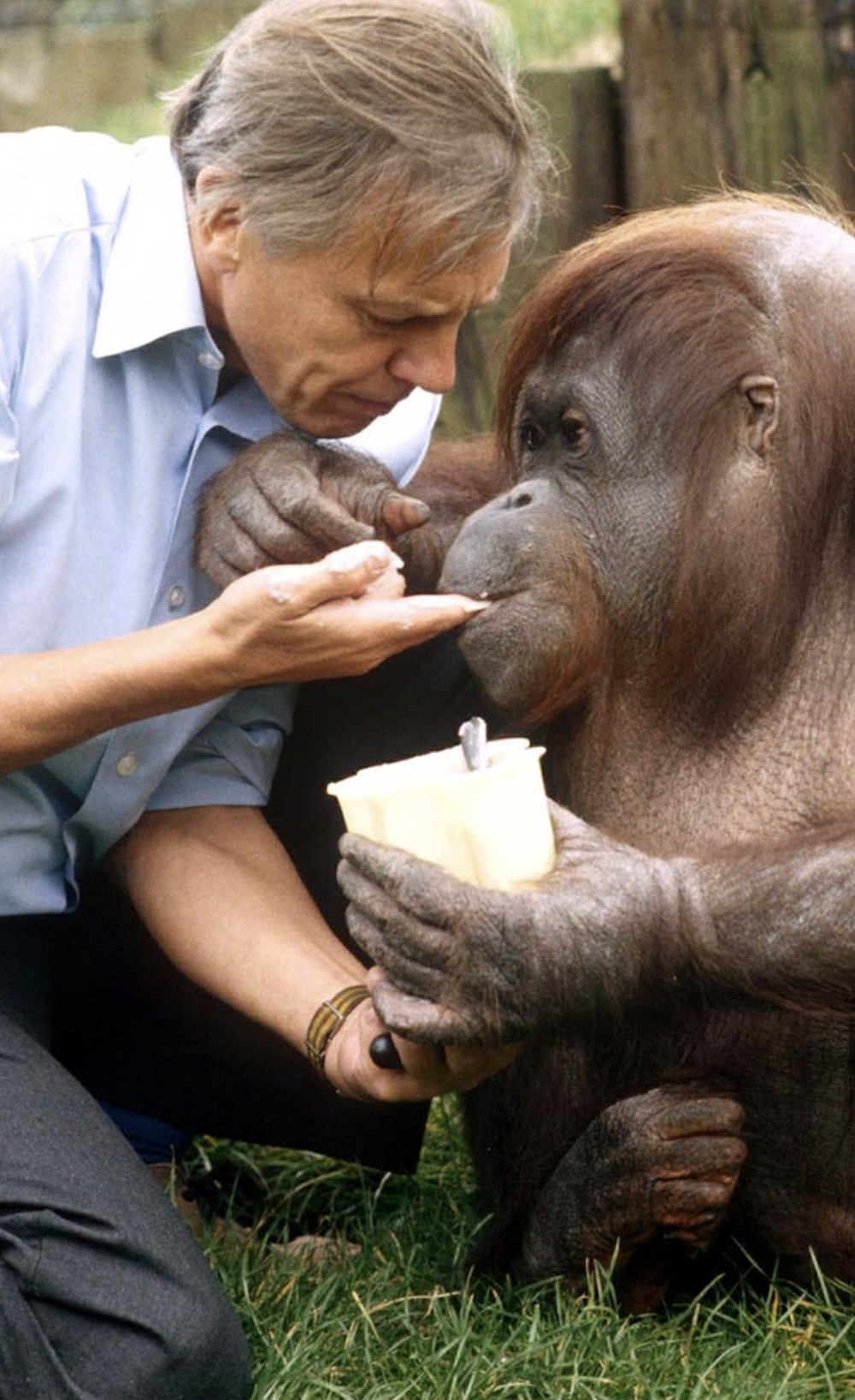
It’s difficult to talk about David Attenborough’s latest offering without dwelling on the the ramifications of its message. As the ninety-three old natural historian makes plain, this visual accompaniment to his latest publication is his witness statement to the natural world’s exponential decline. Within the last century, technological innovation coupled with the rampant rise of globalization has led to a level of ecological devastation that is fast becoming irreversible. Together with the doubling of the world’s population levels and our insatiable appetite for the earth’s finite resources, we are stripping the natural world bare. While Attenborough offers some genuine hope in the final act of the documentary, it’s hard to keep a stiff lip when the most powerful economy officially withdrew from the Paris climate accords earlier this month. Essential viewing. “The natural world is fading. The evidence is all around. It’s happened in my lifetime, I’ve seen it with my own eyes. This film is my witness statement and my vision of the future. The story of how we came to make this gravest mistake and how, if we act now, we can yet put it right.” — David Attenborough
|
|
With the current President of the United States effectively undermining the central tenets of democracy by ignoring the recent election results, one has to wonder what the future holds for the free world. Nick Bryant’s recent conversation with Richard Fidler on the ABC’s Conversations offers a truly fascinating look at the superpower’s undoing. Like the BBC journalist, I share many of the same passions for the US, having always been drawn to its history and current affairs over my own home. Yet the polarizing divisions that continue to surface share (too) many similarities with former (and current) dictatorships. It reminded me of this recent op-ed piece from the Sydney bureau chief of the NY Times and the fact that this growing divide between the haves and have-nots is prevalent in our own backyard. To get a better sense of Bryant’s prognosis for the future I’ve ordered myself a copy of his latest publication When America Stopped Being Great and look forward to sitting down with it once the 46th President is sworn into office.
|
|
Thomas Bidegain’s directorial debut is one of the most honest examinations of the modern war on terror I’ve come across. The fact that the backdrop and its cast of characters are blue collar suburbanites makes this film all the more relevant. Following a French family with a penchant for cowboy culture, the story takes off when the oldest child goes walkabout with her teenage boyfriend. What follows is not only unexpected but searing in its frankness. Bidegain is the writing partner of Jacques Audiard and has collaborated with the acclaimed French filmmaker on such films as A Prophet (my personal favourite), Rust and Bone and most recently The Sisters Brothers. I love that this film doesn’t try to paint a rosy portrait, to hack a Hollywood ending out of a morose world. In fact Bidegain sheds light on the current complexities of our unprecedented moment, closing the story out by offering us a way forward.
|
|
The divisive spirit of the late Stanley Crouch lives on in this thrilling biography on the one and only Charlie Parker. Coming upon this best-seller in Crouch’s recent obituary, I instinctively sought out a copy to find out everything I could know of the elusive genius. Ever since I was a young pup, Parker has held a mystical aura, his body of work entrancing me from an early age. The esteemed saxophonist, whose star faded far too early, cultivated a sound and style that quickly stood apart from his peers. What makes this biography different is Crouch’s ability to situate Parker within his context, helping us better understand the shoulders on which he stood on. Wizards like Duke Ellington, Louis Armstrong, Chu Berry, Bennie Moten and Buster Smith (his foremost mentor) who inspired Parker to work that much harder in finding his own unique voice.
|
|
It’s been a while since a music video left me raptured to the very end. And while this nine-minute clip confronts well-traversed territory about young love and emotional crossroads, the split-screen set-up and execution by Luke Turner, Shia Labeouf and Nastja Rönkkö feels genuinely bespoke. More importantly, the on-screen chemistry between Margaret Qualley (maybe it’s just me but I love how much Andie Macdowell’s youngest daughter is a spitting image of Olivia Williams in Rushmore!) and Shia Labeouf is undeniable and a reminder that star power remains alive and well. I’d never listened to the sounds of Rainsford, a.k.a Rainey Qualley (a.k.a Margaret’s big sister) but found solace in her latest single. It’s also nice to see the next generation pushing the boundaries and turning the lemons of 2020 into bittersweet lemonade.
|
|
In 1970, Miles Davis’ was approached to orchestrate music for a groundbreaking documentary on the rise and fall of Jack Johnson, the first African-American heavyweight champion of the world. While I have yet to track down a copy of Jimmy Jacobs’ doc, it brought back memories of Ken Burns’ Unforgivable Blackness, a fascinating and immersive docu-portrait on the Texan native. I love the way Davis was constantly evolving. As a direct result, the Illinois native was forever shape-shifting through the decades and re-aligning his body of influences in the process. The underlying sounds of this LP possess such a raw energy, an innate strength that perfectly captures the indomitable spirit of a man who thumbed his nose at Jim Crow America, flaunted his wealth in the company of white women and lived his life to the fullest. “I’m Jack Johnson, heavyweight champion of the world. I’m Black. They never let me forget it. I’m Black alright, I’ll never let them forget it.” — Jack Johnson
|
|
I came across this curious listicle on Unyoked’s most recent email newsletter (for those that live Down Under and are in need of some time away their eco-friendly cabins are the best kind of antidote). Nicolas Cole is an online gamer turned online writer who gained notoriety for his viral Quora posts. While I’ve personally never used the platform, I found much solace in his prescriptive list. Like Cole, I’ve been dismayed at so many old friends and peers slowly hanging up their hats as they’ve entered their thirties, turning their backs on spontaneity in return for complacency. Cole offers two statements — ’most people don’t do what they love’ and ‘people don’t like to use their imagination’ — that perfectly encapsulates this transition (IMHO). I love that his primary takeaway is to keep dreaming, learning and to never get too comfortable along the way.
|
|
Confession time. I wasn’t looking forward to streaming Sacha Baron Cohen’s sequel to his 2006 classic, the very premise and timing of its release coming off as cheap and absurd. And yet I couldn’t stop myself guffawing like a clown from the opening sequence, enthralled at Cohen’s ability to turn water into wine yet again. In fact, watching this film through the paradigm of screenwriting left me duly impressed. Not only does the resulting arc feel highly organic but the payoff feels like a cathartic antidote to one of the most surreal and harrowing years in recent memory. Reading about the lengths to which Cohen went in pulling off this sequel — he spent five days in character living with two QAnon individuals (!!!) — left me with a whole new level of respect for the British comedian. Whether you enjoyed the sequel or not (the film splintered my own famiglia right down the middle) Cohen’s ability to incite controversy (the final scene with Rudy Giuliani is a damning indictment) remains stronger than ever.
|
|
As I wrote on my blog last week, John Lahr’s profile on the hard-working actor-cum-director Ethan Hawke left me inspired to keep spinning my creative plates for all they’re worth. It also turned me onto The Good Lord Bird, a limited television series adaptation of James McBride’s bestselling book of the same name. The series follows the pursuits of the maligned abolitionist John Brown and his relentless crusade to free every last slave within the free state of Kentucky. What makes the series all the more refreshing is that it’s told through the eyes of a child slave called Onion whose wit and warmth offers up a rather radical portrayal of the racial divide. A journalist turned novelist whose bestseller Miracle At St. Anna was adapted for the silver screen by Spike Lee no less, McBride has a remarkable gift for shedding much-needed light on the murkier aspects of American history. This twenty questions with the author, presented by Oprah’s book club, proving that McBride has a heart of gold.
|
|
My old-school BFF Lachlan Gell gifted me with a copy of Oliver Bullough’s Moneyland: Why Thieves and Crooks Now Rule The World and How To Take It Back a few months back and has left me glum and giddy. I was made to understand through popular culture (The Sopranos and The Wire being my main sources) that the 21st Century had made it all but impossible to get one over on ‘The Man’. As Bullough attests, the rise of encryption and the shift to a cashless economy has certainly been winning the war on the 99%. As for the uber-wealthy, they are held to very different standards thanks to a new breed of attorneys and their ability to manipulate the loopholes within international law. As Bullough makes plain, it has never been so easy for dictators, oligarchs and duplicitous entrepreneurs to hide their wealth from the taxman. Case in point is Indian Creek, a small Floridian village touted as ‘America’s most exclusive municipality’ whose inhabitants enjoy a combined net worth of 37 billion dollars (!!!). To think that eighty-six high net-worth residents rival the annual economic output of Serbia is something worth chewing over. “The building where I buy my morning coffee is owned in the Bahamas. The place I get my hair cut is owned in Gibraltar. A building site on the way to the train station is owned in the Isle of Man.” — Oliver Bullough
|
|
In preparation for David Fincher’s latest picture — his first film in six years — I soaked up this fascinating New Yorker article on the life of Herman (Mank) Mankiewicz. I remember attending the premiere of Gone Girl at a theatre in Downtown LA and being just as riveted with the director in conversation post-screening. While Mank is certainly a departure, I thoroughly enjoyed his portrayal of the New York native, an adaptation of a screenplay penned by his own father. The real Mank was a boy genius who graduated high school at fourteen before entering Columbia University the following year after spending a gap year working in a cool mine. He was a legendary member of the Algonquin round table, a New York playwright and critic whose reputation secured him a job offer to write for the pictures in the 1920s. He was a man of enormous wit, an intellectual whose various addictions would be his undoing. To think that Citizen Kane, arguably one of the most revered films in history, was penned at a time of crisis, Mank’s reputation in tatters, makes this biopic all the more potent.
|
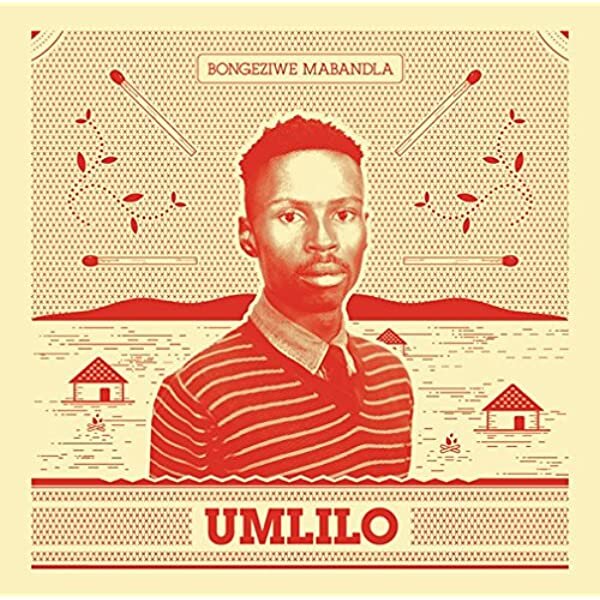
Bongeziwe Mabandla - Umlilo 🎙I don’t even know how I stumbled over the sounds of Bongeziwe Mabandla but after hearing him on a Spotify playlist I had to know more. Mabandla started out as a folk musician, his songs predominantly made up of the Xhosa dialect, a native language of South Africa and Zimbabwe. Umlilo, his debut album, was released in 2012 to international acclaim and quickly established him as a talent to watch. There is something so vibrant and pure in this collection, an innocence that reminds of Bon Iver and reverberates long after the music fades. I’ve been listening to his follow up LPs Mangaliso and iimini all week. Both expand on the gentle sounds from his debut, interspersed with an interesting array of disco pop. I know I'll be returning over and again to the South African native in the years to come.
|
|
Thanks for reading. To show your support, forward it to someone who’d like it.
If you’re seeing this newsletter for the first time, you can read previous issues and subscribe here.
|
|
|
|
|