|
Kelefa Sanneh cuts through the noise and much more!͏ ͏ ͏ ͏ ͏ ͏ ͏ ͏ ͏ ͏ ͏ ͏ ͏ ͏ ͏ ͏ ͏ ͏ ͏ ͏ ͏ ͏ ͏ ͏ ͏ ͏ ͏ ͏ ͏ ͏ ͏ ͏ ͏ ͏ ͏ ͏ ͏ ͏ ͏ ͏ ͏ ͏ ͏ ͏ ͏ ͏ ͏ ͏ ͏ ͏ ͏ ͏ ͏ ͏ ͏ ͏ ͏ ͏ ͏ ͏ ͏ ͏ ͏ ͏ ͏ ͏ ͏ ͏ ͏ ͏ ͏ ͏ ͏ ͏ ͏ ͏ ͏ ͏ ͏ ͏ ͏ ͏ ͏ ͏ ͏ ͏ ͏ ͏ ͏ ͏ ͏ ͏ ͏ ͏ ͏ ͏ ͏ ͏ ͏ ͏ ͏ ͏ ͏ ͏ ͏ ͏ ͏ ͏ ͏ ͏ ͏ ͏ ͏ ͏ ͏ ͏ ͏ ͏ ͏ ͏ ͏ ͏ ͏ ͏ ͏ ͏ ͏ ͏ ͏ ͏ ͏ ͏ ͏ ͏ ͏ ͏ ͏ ͏ ͏ ͏ ͏ ͏ ͏ ͏ ͏ ͏ ͏ ͏ ͏ ͏ ͏ ͏ ͏ ͏ ͏ ͏ ͏ ͏ ͏ ͏ ͏ ͏ ͏ ͏ ͏ ͏ ͏ ͏ ͏ ͏ ͏ ͏ ͏ ͏ ͏ ͏ ͏ ͏ ͏ ͏ ͏ ͏ ͏ ͏ ͏ ͏ ͏ ͏ ͏ ͏ ͏ ͏ ͏ ͏ ͏ ͏ ͏ ͏ ͏ ͏ ͏ ͏ ͏ ͏ ͏ ͏ ͏ ͏ ͏ ͏ ͏ ͏ ͏ ͏ ͏ ͏ ͏ ͏ ͏ ͏ ͏ ͏ ͏ ͏ ͏ ͏ ͏ ͏ ͏ ͏ ͏ ͏ ͏ ͏ ͏ ͏ ͏ ͏ ͏ ͏ ͏ ͏ ͏ ͏ ͏ ͏ ͏ ͏ ͏ ͏ ͏ ͏ ͏ ͏ ͏
MY FAVOURITE THINGS | The Agony And The Ecstasy
|
“We can, for the sake of politeness, agree to disagree and not to mock one another’s musical tastes. But even those of us who are nominally grown-ups may find that we never quite outgrow the sense that there is something profoundly good about the music we like, something profoundly bad about the music we don’t, and something profoundly wrong with everyone who doesn’t agree.”— KELEFA SANNEH
|
|
I’ve been consumed with the power of unintentional thinking after listening to Jay Shetty and Scott O’Neill in conversation on our never-ending drive back from the Noosa hinterlands last month. According to Shetty, we experience close to 6000 thoughts per day with the great majority — 80% to be exact — tinged with negativity. In the weeks since our return I’ve been working to catch myself out on these self-sabotaging reflections. According to my unconscious, I’m nothing but a worthless hack, an imitator, and a good-for-nothing that ought to throw the towel in. In place of waging war on these discouraging reflections, I’ve been placating the native mind with genuine encouragement, meditation and Wim Hof’s ten-minute breath work routine. This new exercise has not only helped to start the year on the good foot but inspired me to curate a good vibrations playlist.
|
|
Kelefa Sanneh’s engrossing Longform podcast interview turned me onto this illuminating 2001 profile on Jay-Z and compelled me to seek out his most recent publication Major Labels: A History of Popular Music in Seven Genres. Sanneh, a New York based journalist, has a deft ear, a broad palette, and a no-nonsense approach to translating the complexities of the music industry into simple truths. Music has that rare ability to unite or divide us within the opening bar of a song. As Sanneh is quick to note, this universal truth is the primary catalyst for the continual division and sub-division of music into unique genres and categories. And while the formative years of Hip Hop and Country music are singularly unique, it’s remarkable to consider that each and every genre needed the helping hand of commerce to thrive.
|
|
There isn’t enough time and space to remark on how Denis Villeneuve’s mesmerizing adaptation set my soul aflame. As I dramatically remark on Popcorn Therapy’s Christmas Special, the arthouse blockbuster was the saving grace of 2021, and gave me renewed hope for the future of tentpoles. The Quebecois filmmaker continues to move from strength to strength, his superhuman stamina and childlike passion never trampling on the the fundamentals of story. Villeneuve translates the intricate complexities of any given narrative with startling clarity, a fact which sets him apart from his peers, and helps the studio moguls sleep a little easier. I’ll be counting down the days and weeks to the release of Part Two next year.
|
|
A recent weekend outing to see Licorice Pizza, P.T. Anderson’s latest period spectacle, left me strangely unmoved. Ever since I first rented Anderson’s mesmerizing early films from my local video store, the Los Angeles native became my ride-or-die filmmaker, a sentiment shared by a great many impassioned male cinephiles. After happening across Thomas Flight and his uniquely moving YouTube video essays, it left me musing on just how much Anderson’s body of work has shifted, forsaking the staccato rhythms of his early work for a more restrained and painterly approach. The essay not only revised my muted opinions around Licorice Pizza but helped me realize that the young maverick that gave life to Boogie Nights has matured into a middle-aged family man with a new set of dreams.
|
|
Richard Schickel’s Clint: A Retrospective led me down a David Webb Peoples wormhole while reading about the making of Unforgiven. Before his pop cultural ascent, Peoples cut his teeth on The Day After Trinity, Jon Else’s 1981 documentary on Robert Oppenheimer and his dream to harness nuclear fission energy. Much like Morten Tyldum’s The Imitation Game, the Manhattan Project was a covert operation that would prove instrumental in ending the war in the West’s favour. Where the two operations differ is that Oppenheimer’s brainchild would usher in an age of global peace that has miraculously held to this present day. This is vital viewing for anyone with a deep-seated curiousity in Christopher Nolan’s upcoming film on the man himself. You can watch the doco in full here.
|
|
While John M. Barry focuses this think-piece on a starker end-goal, I take great comfort in his reflections on history. As the author of The Great Influenza: The Story of the Deadliest Pandemic in History tells it, the world had all but tired of the 1918 influenza outbreak by the arrival of the fourth wave in 1920. It’s comforting to note that our great-grandparents shared a similar fatigue with the ongoing mutations of a far deadlier strain. Much as we don’t like to admit it, plagues and global outbreaks are a part and parcel of existence, and can be traced through every stage of civilization. The unforeseen gift of this pandemic has not only infused the world with a humble sense of circumspection but reminded us to savour the little things.
|
|
David Ehrlich’s end-of-year video countdown blends a curious blend of studio and arthouse fare in celebration of his top twenty-five films of 2021. The spellbinding edit not only features some of my own favourites but inspired me to search out David Lowery’s mythical fantasia. The Wisconsin native has contributed some of my favourite films of the past decade, from 2013’s Ain’t Them Bodies Saints to 2018’s The Old Man and the Gun. The Green Knight is by far his most daring feat, a lavish enterprise filled with so many visual easter eggs and a lush colour palette. Inspired by a rather disturbing fourteenth-century poem, Lowery explores the limits and bounds of heroism, turning many of the genre’s precepts on its head to deliver a deeply profound vision on the meaning of existence. This Vanity Fair scene breakdown reminds that the best films are built upon endless layers of unadulterated passion.
|
|
Terrence Malick picks up where he left off from The Tree of Life, expanding upon a rather sublime passage to explore the genesis of the universe. With a running time of forty-five minutes and the assured narration of Brad Pitt, this documentary is readily digestible and if you’re willing to read between the lines, or in this case the alluring CGI visuals and naturalistic cinematography, a much more holistic message can be found. Not only does it inspire meditative reflection on our very existence but reminds that the creation of life was borne out of nothing more than dust and particles. A fascinating offering from an increasingly reflexive filmmaker. Currently streaming on the arthouse platform Mubi.
|
|
Before her passing at the end of last year, Eve Babitz enjoyed a much-deserved reappraisal of her body of work after Lili Anolik’s Vanity Fair article hit the stands in 2014. Babitz has a deft gift for writing, a fact overshadowed by her romantic life and unashamed approach to sex. I got turned onto Slow Days, Fast Company after this vintage clip resurfaced of the late author calling Joan Didion during a promo spot on C-SPAN. Like Didion, the fellow Californian shared an impulsive need to capture the shape-shifting moods and sentiments of her surroundings. For any and all Babitz fans, this 1991 Esquire article Who Was Jim Morrison? peels back the mythical veil on my teenage idol, and offers a much needed revisionist stance from the muse that inspired 1971’s L.A. Woman. "I've been in love with people and ideas in several cities and learned that the lovers I've loved and the ideas I've embraced depended on where I was, how cold it was, and what I had to do to be able to stand it."
|
|
An impulsive re-watch of The Post, Steven Spielberg’s charming exposé on the publication of the Pentagon Papers, left me captivated by Ben Bradlee. The Washington Post’s managing editor was a larger than life figure, an innovative networker whose rolodex included former Presidents and tycoon magnates. While Tom Hanks’s magnanimous portrayal differs sharply from Jason Robards’s gruff portrait in All The Presidents Men, both explore the grandiose personality that made Bradlee a household name. As David Remnick’s 1994 profile clarifies, Bradlee represented the last of a generation, a monied establishment figure whose heritage traced back to the Mayflower, and imbued him with an air of infallibility. Reading of Bradlee’s gift for gut instincts led me to hunt down a second-hand copy of his 1995 bestselling autobiography A Good Life.
|
|
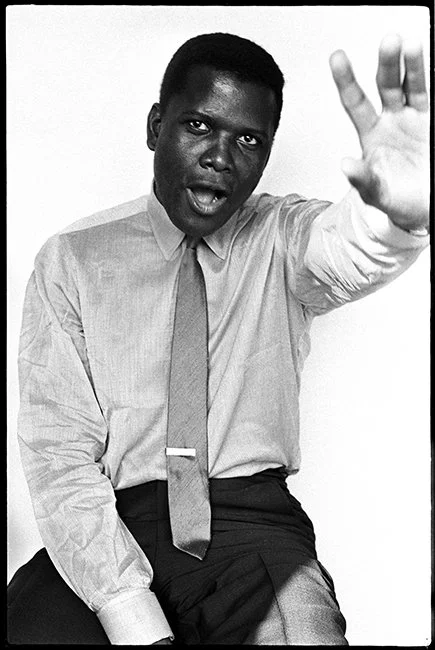
The passing of Sidney Poitier led me to seek out some overlooked classics like Lilies of the Field, a sparse narrative that rests solely on the charisma of its leading man, who incidentally took home an Oscar for his performance. Yet nothing could prepare me for the sting that accompanied 1961’s A Raisin In The Sun. The film, an adaptation of Lorraine Hansberry’s Broadway hit, predominantly takes place within the narrow confines of a two-bedroom apartment in Chicago’s South Side. Set at the start of the nineteen-sixties, the hard-hitting family drama precipitates the calamitous changes afoot for the decade by examining the desperate dreams of a fragmented household. Poitier oozes megawatt charisma alongside a young Ruby Dee and channels the frustrations of a man handicapped by the colour of his skin.
|
|
I’ll never forget dining in the main room of Spago’s in Beverly Hills when my folks came to visit Los Angeles many moons ago. As we were readying to leave, I noticed my father make a beeline for a well-positioned banquette to shake the hand of a refined looking gentleman. As he recounted later, Sidney Poitier was not only gracious but genuinely moved by his well wishes. After reading Wesley Morris’s tender-hearted farewell alongside his touching tribute on The Daily, it helped me appreciate just how much Poitier and his illustrious career paved the way for minorities of all stripes. He was alive on screen, the first black man to be top billed and promoted as a symbol but more importantly a man. To think that the Hollywood heavyweight only ventured into acting to prove a dismissive casting director wrong is some kind of wonderful. “Were anyone to ask me who’s the greatest American movie star, my answer would never change. And it will never change because the answer is easy. The greatest American movie star is Sidney Poitier.” — Wesley Morris
|
|
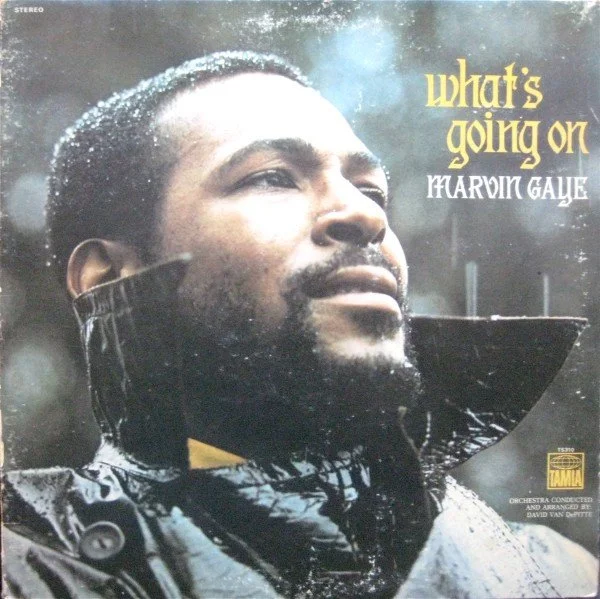
Rolling Stone magazine, under the helm of founder Jann Wenner’s son, has been cleverly adapting the music publication for the increasingly content-hungry global marketplace. Turning their 500 Best Albums of All Time poll into a podcast series was a no-brainer and a fascinating way to cultivate a new audience base and indulge music buffs of all walks. Marvin Gaye is one of the few artists whose unique life story is just as compelling as his musical output. As the episode makes plain, What’s Going On, which now stands as the greatest LP of all time, married the public and the private in an altogether new way. As fellow Motown hitmaker Smokey Robinson attests, the album was well ahead of its time and now stands as a prescient anthem to our current woes.
|
|
Thanks for reading. To show your support, forward it to someone who’d like it or treat yourself to one of my books.
If you’re seeing this newsletter for the first time, you can read previous issues and subscribe here.
|
|
|
|